 KH
KH  FR
FR  AR
AR CN
CNTeam Europe Boosts Sustainable Production in Cambodia’s Agribusiness
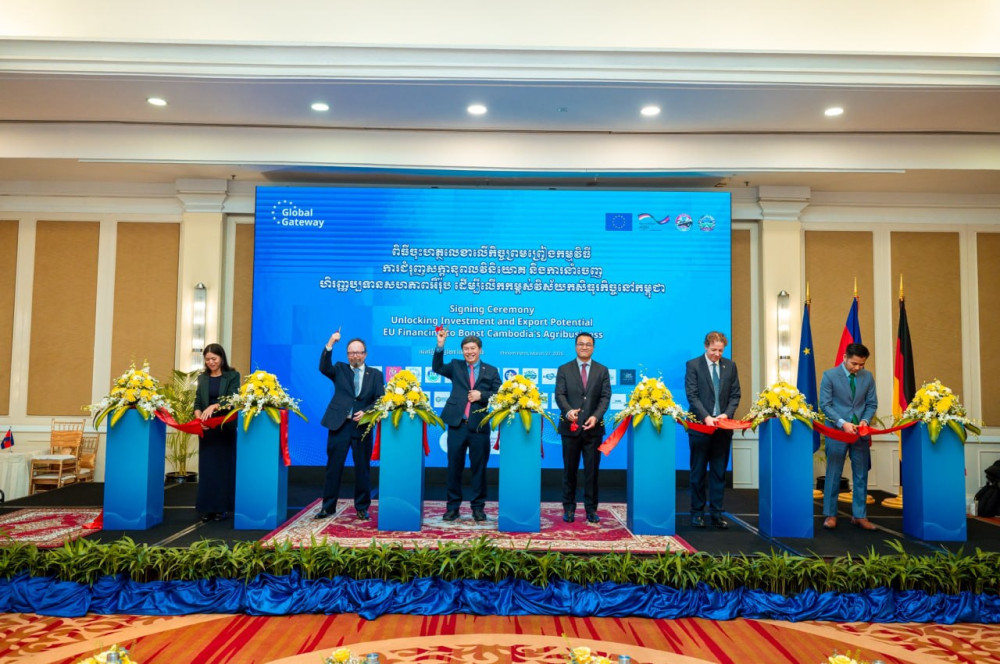
AKP Phnom Penh, March 27, 2026 -- The new National Agricultural Laboratory funded by the EUR 24.3 million (US$ 28.1 million) EU-German Cambodia Partnership for Sustainable Agriculture and Food Systems (CAPSAFE) programme was launched today to boost sustainable production in Cambodia’s agribusiness.
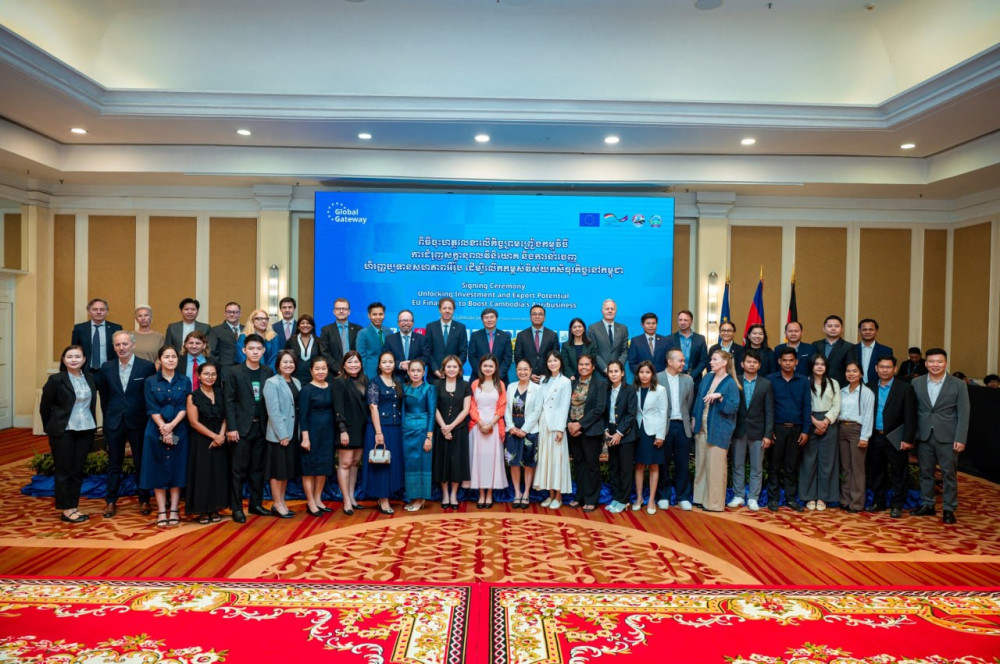
The launching ceremony was held under the presidency of H.E. Sim Sokheng, Secretary of State at the Ministry of Commerce, and H.E. Prak David, Secretary of State at the Ministry of Agriculture, Forestry and Fisheries, alongside EU Ambassador H.E. Igor Driesmans and German Ambassador H.E Stefan Messerer.
This state-of-the-art testing facility, accredited by ISO, will help Cambodian food exports meet international standards for export and global trade, according to a statement issued on Mar. 27.
Team Europe, including the EU, Germany, the Netherlands work together under the Global Gateway framework to strengthen Cambodian agribusinesses, unlock new investments, and build a more competitive and sustainable agricultural sector.
Furthermore, 29 Cambodian Small and Medium Enterprises from the cashew, pepper, and mango sectors were selected to receive technical assistance and co-financing support.
The selected businesses show a strong potential to bolster their production, increase revenue, create jobs and meet market requirements with the additional support to be provided.
This initiative is part of the EU-German GATE programme, which supports companies in complying with international standards and access high end markets such as the European Union.
EU Ambassador H.E. Igor Driesmans said that by investing in vital infrastructure like the National Agricultural Laboratory and providing targeted support to SMEs, Team Europe is helping Cambodia move up the value chain.
“The global market increasingly demands sustainable, high-quality products, and Cambodia is well-positioned to meet that need. The EU will help to ensure that this growth is green, inclusive, and resilient,” he said.
H.E. Stefan Messerer, Ambassador of Germany to Cambodia, emphasised the strategic importance of this collaboration, citing that Germany is committed to supporting Cambodia’s agribusiness sector through sustainable production.
“Through the EU-German CAPSAFE and EU-German GATE initiatives, with GIZ’s technical expertise, we are bridging the gap between Cambodian producers and European buyers. Our Team Europe approach does more than open markets; it creates jobs and raises living standards.
Ultimately, these efforts are vital to ensuring Cambodia’s transition towards a middle-income country is just, successful and sustainable,” he said.
During the event, two additional projects were signed by Germany and the Netherlands. One is the Responsible Sourcing Hub Cambodia project, aimed at positioning Cambodia as a sustainable agri-product sourcing hub for Europe.
The second, Scaling Climate-Resilient Mango Processing, led by Kirirom Food Production, will expand mango processing to 80,000 tonnes per year, introduce new products like juice and purée, and support farmers with training and improved inputs to reduce post-harvest loss.
The EU applies a 360-degree approach to activating the Global Gateway in Cambodia. The private sector is engaged at every stage—from building partnerships and improving access to finance to strengthening skills and capacity.
The EU ensures that investments are sustainable, scalable, and capable of supporting Cambodia’s long-term economic transformation, bolstering Cambodia’s market access and diversification.
As the country approaches its graduation from Least Developed Country (LDC) status in 2029, Team Europe interventions directly address obstacles in processing capacity, compliance with international standards, and climate resilience.
By Chea Vannak