 KH
KH  FR
FR  AR
AR CN
CNInformation Minister: Unexploded Cluster Munitions Pose Long-Term Threat to Cambodian Civilians
AKP Phnom Penh, August 10, 2026 --
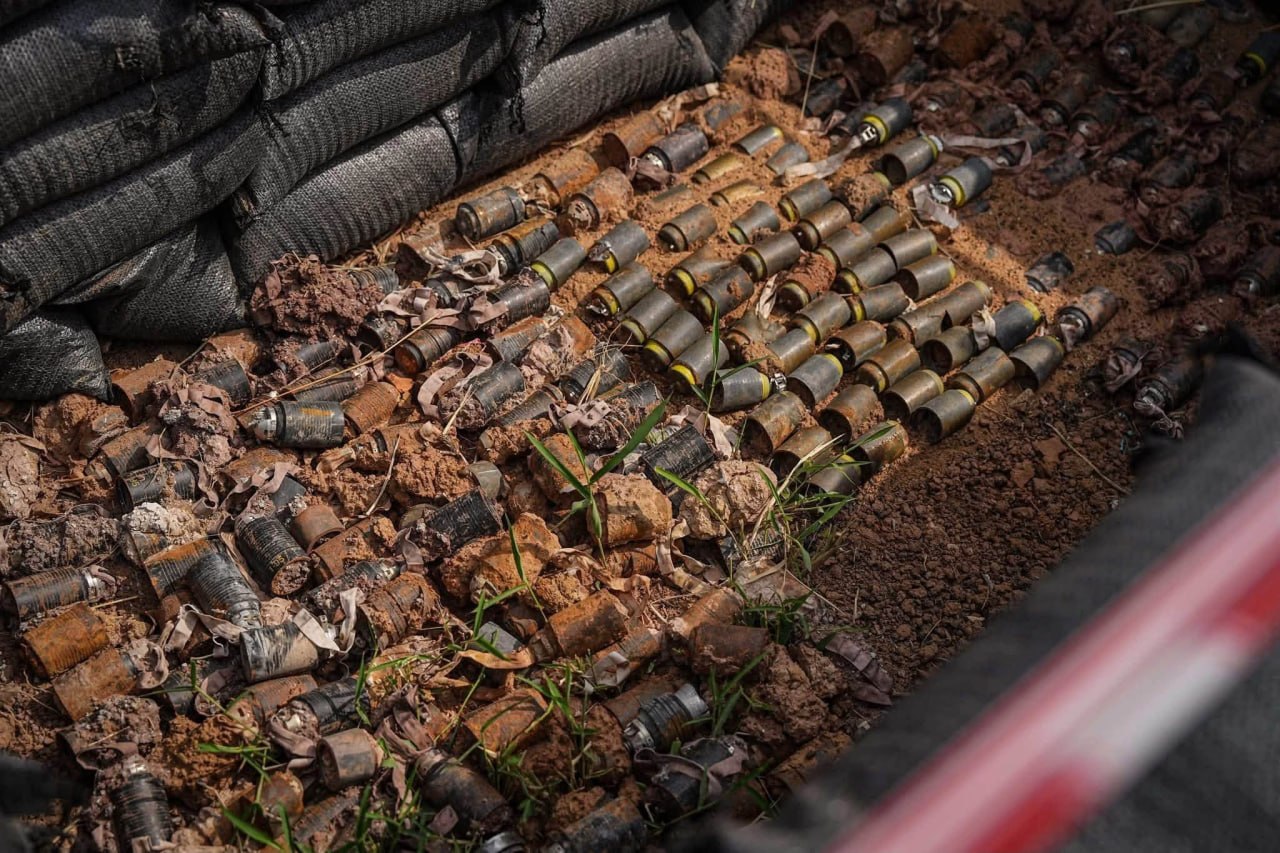
Cambodian Minister of Information H.E. Neth Pheaktra has warned that unexploded cluster munitions fired by Thai forces into Cambodian territory could continue to kill and endanger civilians for years, even after the cessation of hostilities.
In a Facebook post on Monday morning, H.E. Neth Pheaktra cited H.E. Heng Ratana, Director-General of the Cambodian Mine Action Centre (CMAC), as informing Mr. Alain Aeschlimann, ICRC Headquarters’ Adviser for Safety and Crisis Management, that a recently completed survey of 335 villages had revealed the serious extent of contamination by remnants of Thai military ordnance.
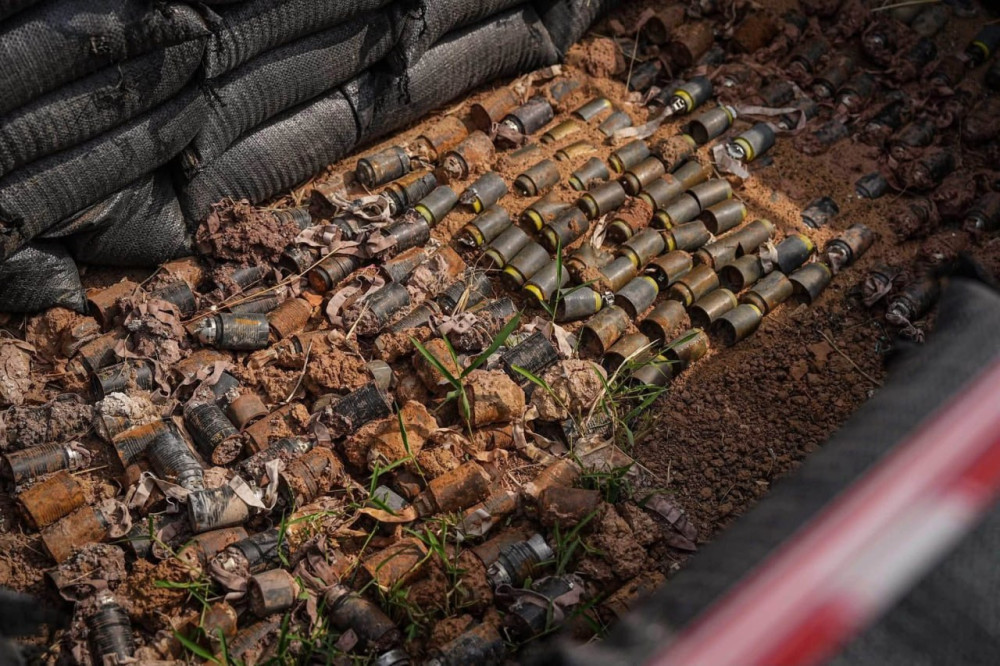
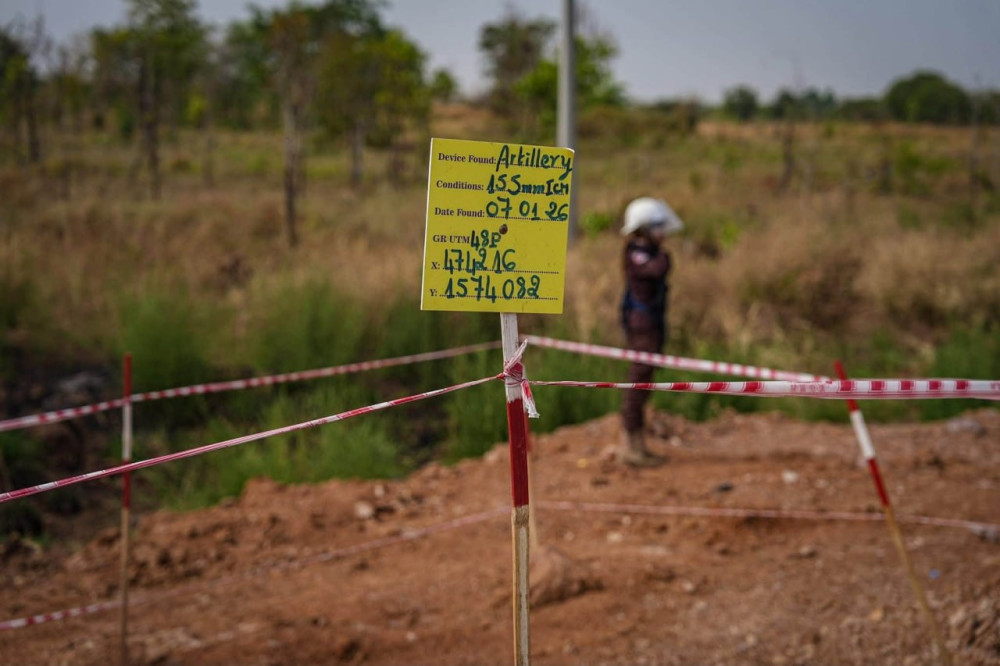
According to H.E. Heng Ratana, 5,348 affected polygons have so far been identified across a total area of 3,872 square kilometres, including 3,858 polygons contaminated by cluster munitions, covering nearly 2,700 square kilometres.
He said these figures were not merely statistics, but reflected the scale of the danger that Cambodian civilians face in their daily lives.
H.E. Heng Ratana further estimated that between 6 million and 7 million unexploded M42, M46 and M85 submunitions fired by Thai forces could be scattered across villages, rice fields, farms and other agricultural land.
The unexploded ordnance poses a continuing threat, potentially killing or injuring civilians and preventing people from returning home, cultivating their land and resuming safe and normal lives, H.E. Neth Pheaktra said.
He added that the estimated contamination could be significantly greater than the approximately one million unexploded cluster munitions estimated to have remained after the 2006 Lebanon-Israel conflict.
The Minister stressed that the cluster-munition contamination is not merely a military or technical mine-clearance issue, but also a humanitarian, human rights and livelihood-recovery issue affecting entire communities.
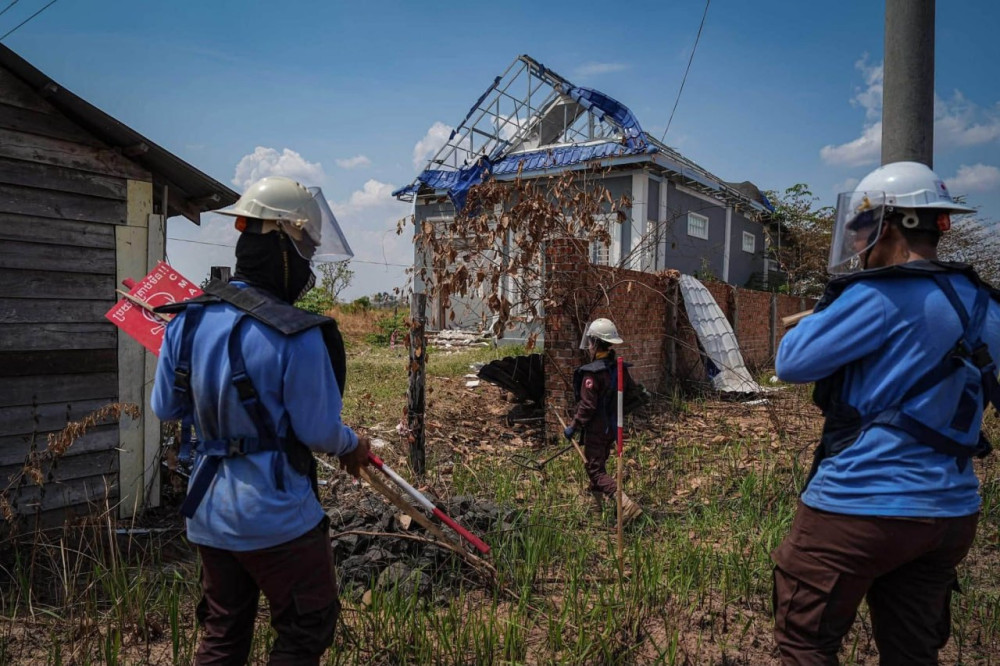
He said the alleged dispersal of cluster munitions by Thai forces in areas containing schools, Buddhist pagodas, villages, farmland and civilian infrastructure had left a serious humanitarian crisis and posed long-term threats to lives, food security, livelihoods and Cambodia’s socio-economic development.
“Cluster munitions do not know a ceasefire,” H.E. Neth Pheaktra said, warning that unexploded ordnance could turn homes, schools, farmland and children’s playgrounds into danger zones for both the present and future generations.
He emphasised that genuine peace cannot be measured merely by the silence of gunfire. Rather, peace should be measured by whether civilians can safely return home, children can return to school, farmers can access their fields and communities can live without fear of stepping on unexploded ordnance.
The Minister noted that the current figures do not yet represent the full extent of contamination, as 14 additional villages in frontline areas along the border have yet to be surveyed and assessed by technical teams.
As a result, the actual size of the affected areas and the number of unexploded ordnance items could be considerably higher than the figures identified so far, he said.
H.E. Neth Pheaktra also raised questions over responsibility for clearing the remnants of war, restoring contaminated land to safety, assisting victims and ensuring that civilians can return to their homes and farmland safely and with dignity.
“The humanitarian consequences of war should not be left for civilians to bear alone,” he said.
He concluded that while fighting may end within days, the legacy of cluster munitions can continue to kill and injure people for years or even decades. Therefore, ending a war should mean not only stopping the shooting, but also eliminating the dangers left behind by the conflict and ensuring the safety and recovery of affected civilians.

By C. Nika