 KH
KH  FR
FR  AR
AR CN
CNThailand Cannot Hide the Evidence: ASEAN, the United Nations and the International Community Are Watching the Thai Military’s Acts of Aggression
AKP Phnom Penh, August 24, 2026 --
Cambodian Minister of Information H.E. Neth Pheaktra said the situation along the Cambodia-Thailand border is being closely monitored by ASEAN, the United Nations, foreign diplomatic representatives and the wider international community, stressing that evidence of developments on the ground cannot be concealed.
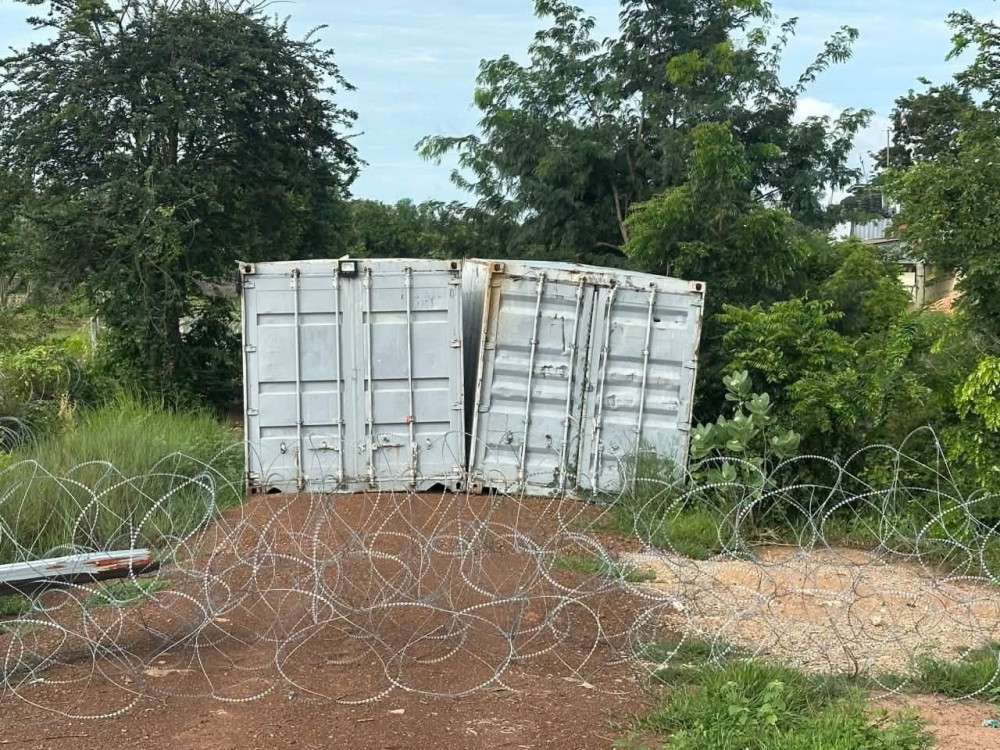
In a Facebook post on Aug. 24, the Minister said shipping containers, barriers, barbed wire and other measures that alter the situation along the border, as well as the continued displacement of Cambodian civilians, are facts that can be observed, documented and independently verified.
He noted that approximately 20,000 Cambodian civilians, out of some 650,000 people displaced at the height of the crisis, remain unable to return to their homes.
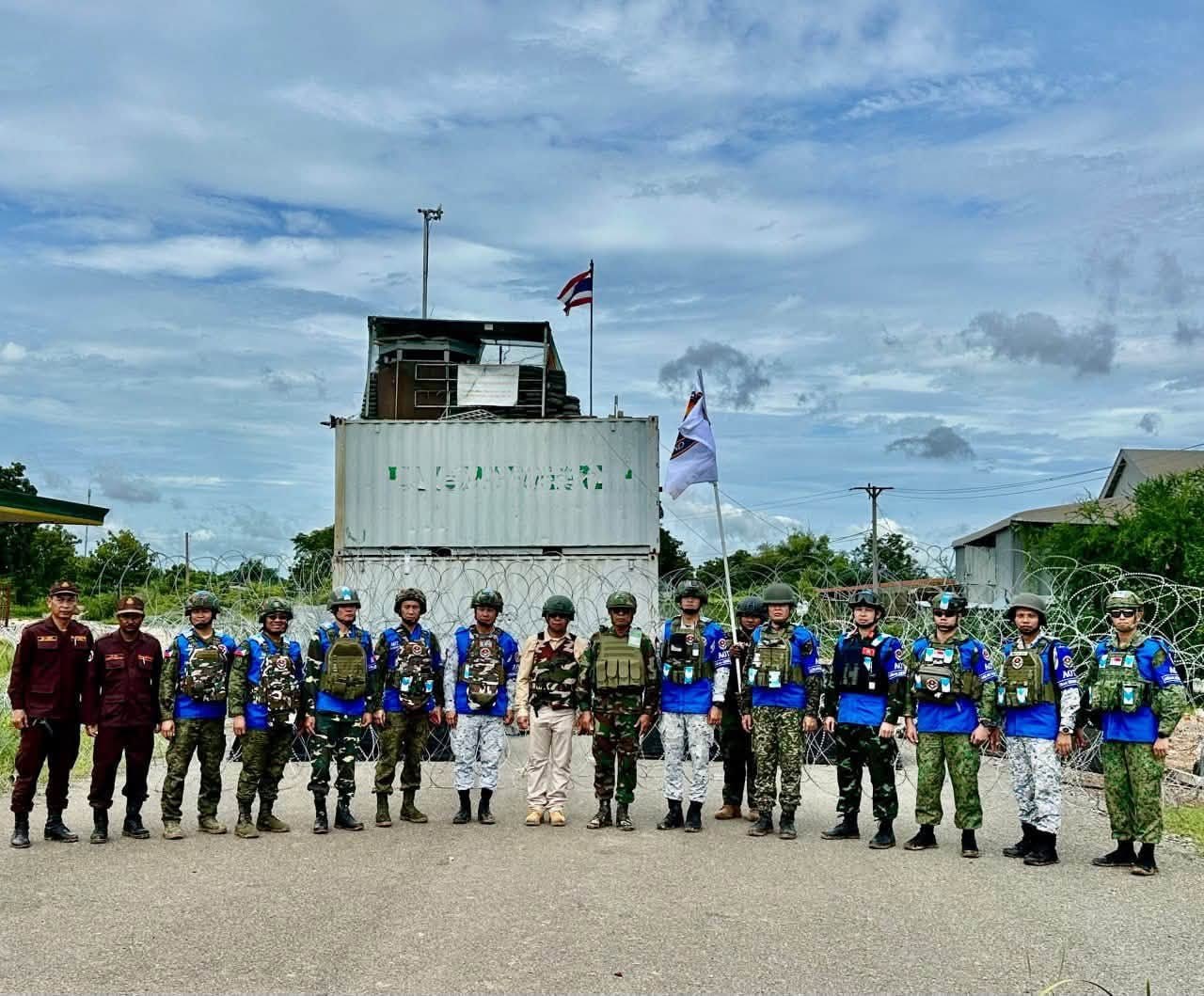
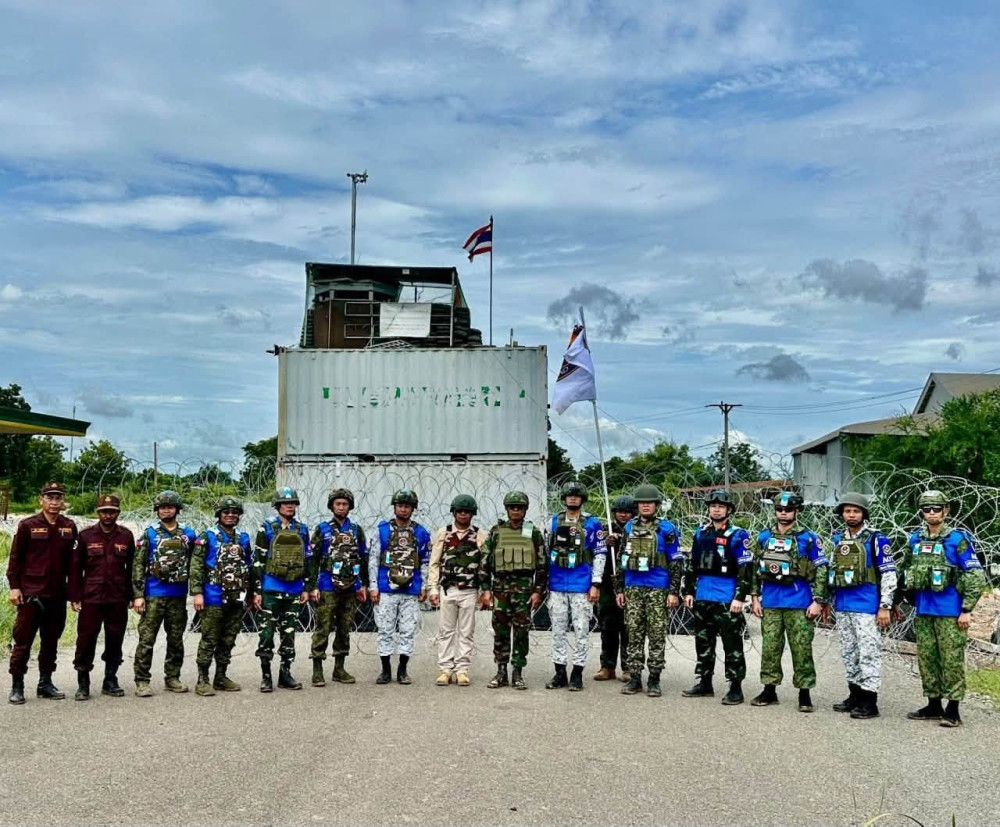
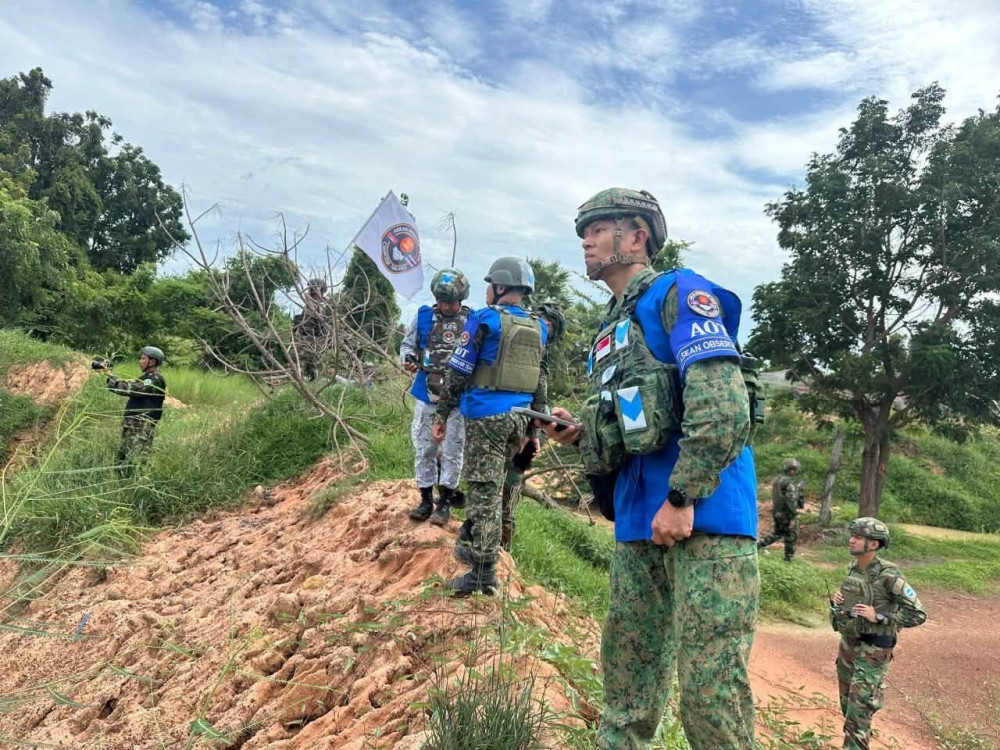
According to H.E. Neth Pheaktra, the ASEAN Observer Team in Cambodia (AOT-KH), led by the Philippines following the handover from Malaysia, has continued conducting field missions to observe, verify and report on conditions along the Cambodia-Thailand border.
At the Boeung Trakuon border area in Kouk Romiet commune, Thmor Puok district, Banteay Meanchey province, AOT-KH inspected 14 locations where 44 shipping containers had been deployed. The Minister said 7,873 Cambodian civilians from 1,869 families, including 1,847 children, remain unable to return home.
In Chouk Chey and Prey Chan villages, the observers inspected another 10 locations containing 72 shipping containers. A total of 5,386 Cambodian civilians from 1,449 families, including 1,569 children, remain unable to return to their homes in those areas.
Taken together, the three areas involve 24 locations, 116 shipping containers and 13,259 Cambodian civilians from 3,318 families, including 3,416 children, who have yet to return to their residences, he said.
The Minister stressed that these figures do not include displaced people and other barriers reportedly associated with Thaimilitary actions in Preah Vihear, Oddar Meanchey and Pursat provinces.
“These are not merely statistics,” H.E. Neth Pheaktra said, noting that behind every shipping container is a family waiting to return home and children separated from their homes, schools and communities.
He said the situation runs contrary to Point 4 of the Joint Statement of Dec. 27, 2025, which provides for displaced civilians to return to their homes safely and with dignity, as well as relevant principles of international law.
The Minister further pointed out that the situation has been witnessed not only by AOT-KH but also by foreign diplomatic representatives who visited affected border areas. He also referred to the mission of UN Special Rapporteur on the situation of human rights in Cambodia Thomas Andrews, who observed barriers, shipping containers and wire obstacles and raised concerns about civilians unable to return home.
H.E. Neth Pheaktra emphasised that Cambodia remains committed to resolving border issues through established legal and bilateral mechanisms.
He reaffirmed Cambodia's position that the internationally recognised Cambodia-Thailand boundary should be addressed on the basis of the Franco-Siamese treaties and conventions, boundary protocols, maps and delimitation results of the Franco-Siamese boundary commissions, the 2000 Memorandum of Understanding, the 2003 Terms of Reference and relevant principles of international law.
“Cambodia does not recognise any alteration of the boundary resulting from the use of force or from unilateral attempts to create facts on the ground,” he stressed.
He called for the Joint Boundary Commission (JBC) and international law to serve as the proper pathway forward, rather than unilateral actions or the creation of a fait accompli. He also stressed that surveying and demarcation should be carried out through mechanisms mutually agreed by both sides.
At the same time, Cambodian civilians must be allowed to return to their homes safely and with dignity, in accordance with the commitments under the Dec. 27, 2025 Joint Statement.
“A ceasefire is not a license to create new facts on the ground. Peace is not merely the absence of gunfire; peace must also mean that civilians can return to their homes,” the Minister said.
He concluded that developments along the border can no longer take place without international scrutiny, as ASEAN, diplomatic representatives, the United Nations and the broader international community continue to observe the situation.
“Force may create a temporary fait accompli, but it cannot transform occupation into lawful sovereignty,” H.E. Neth Pheaktra said, adding that ultimately, “the facts, the law and the evidence on the ground will speak for themselves.”
By C. Nika