 KH
KH  FR
FR  AR
AR CN
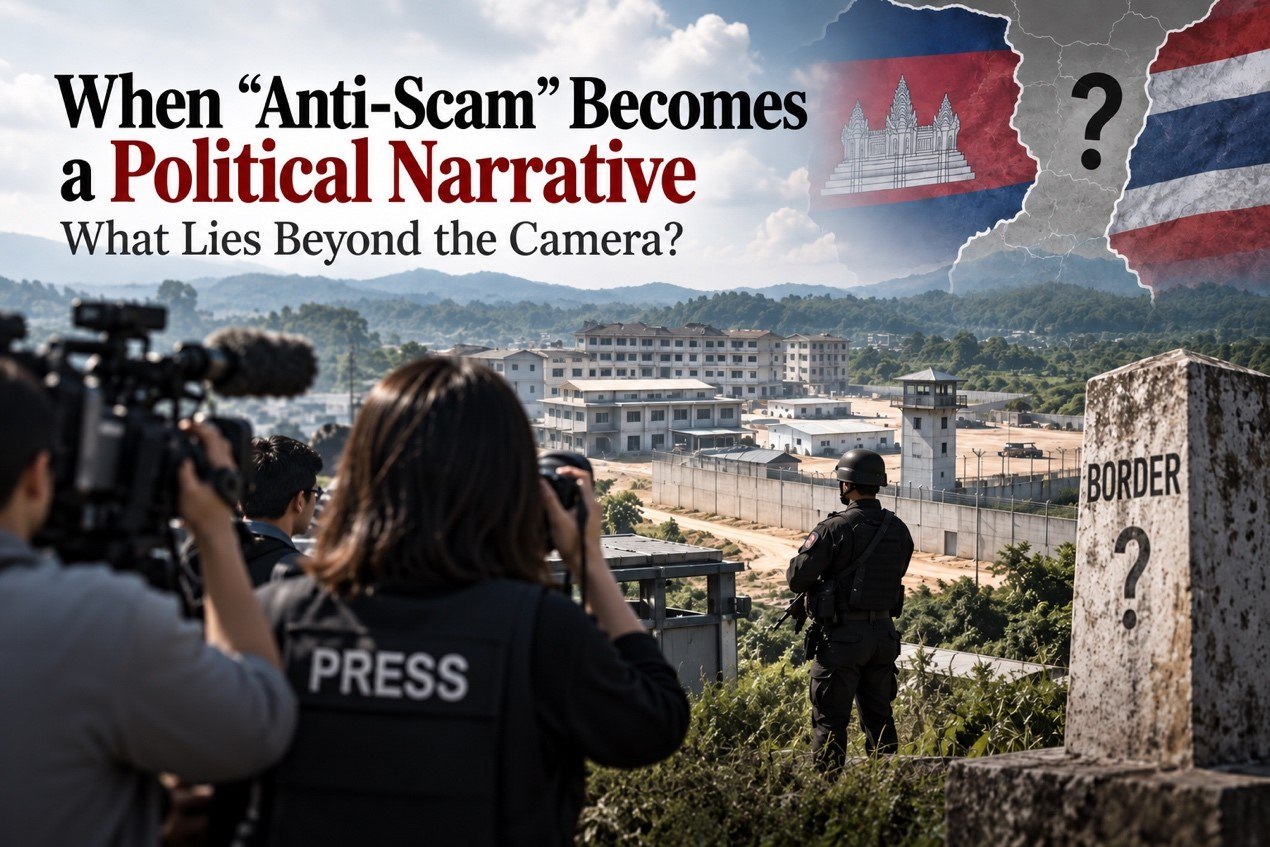
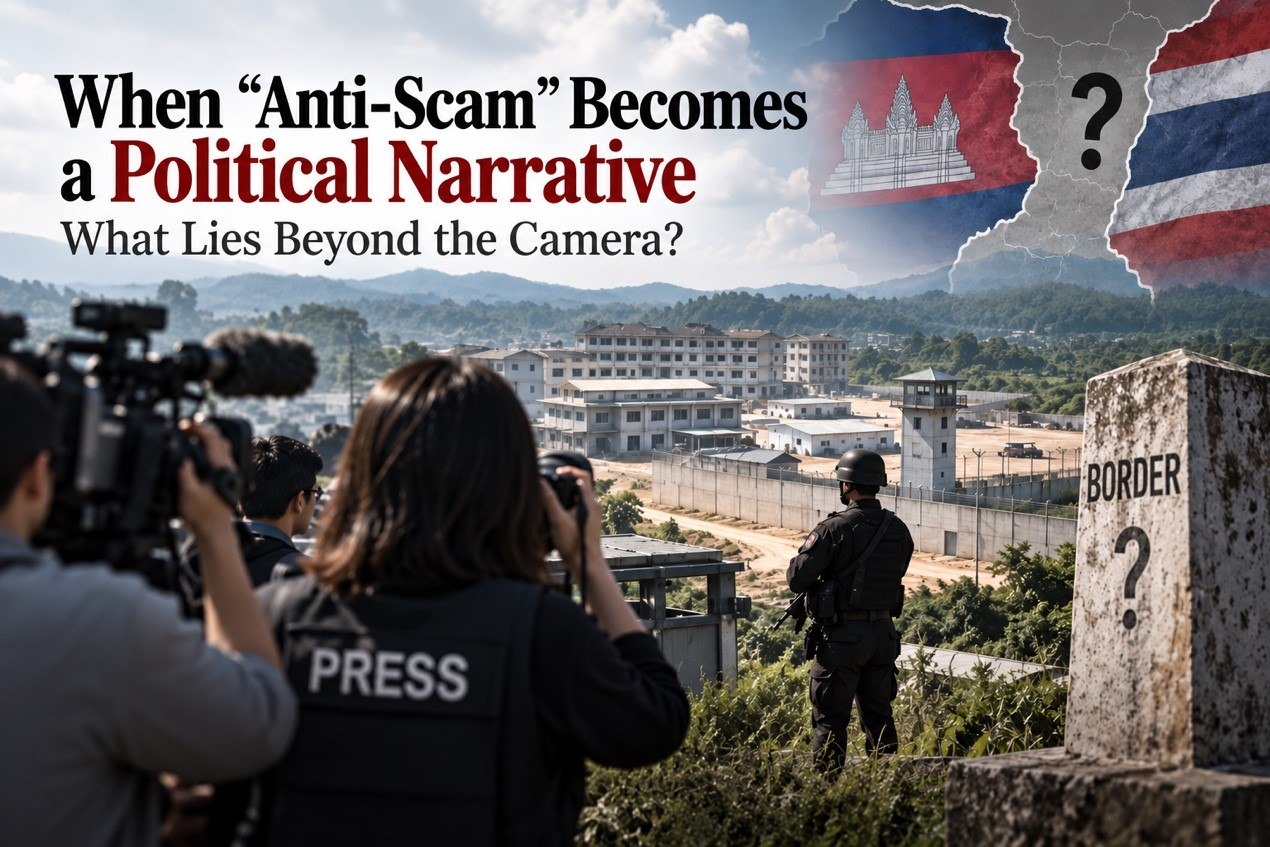
CNOPINION: When “Anti-Scam” Becomes a Political Narrative: What Lies Beyond the Camera?
AKP Phnom Penh, September 13, 2026 --
Combating online scams is a global concern. Cross-border scams, human trafficking and the flow of illicit funds are global challenges that require stronger international cooperation and coordinated action. But the question is this: when “anti-scam” is brought into a territorial dispute, is it being given a political meaning that goes beyond law enforcement?
When journalists are taken to a so-called “scam compound”, they should ask not only, “What happened here”, but also: Which country does this territory belong to? Whose territory are they actually standing on?
What the Camera Shows—and What It Leaves Out
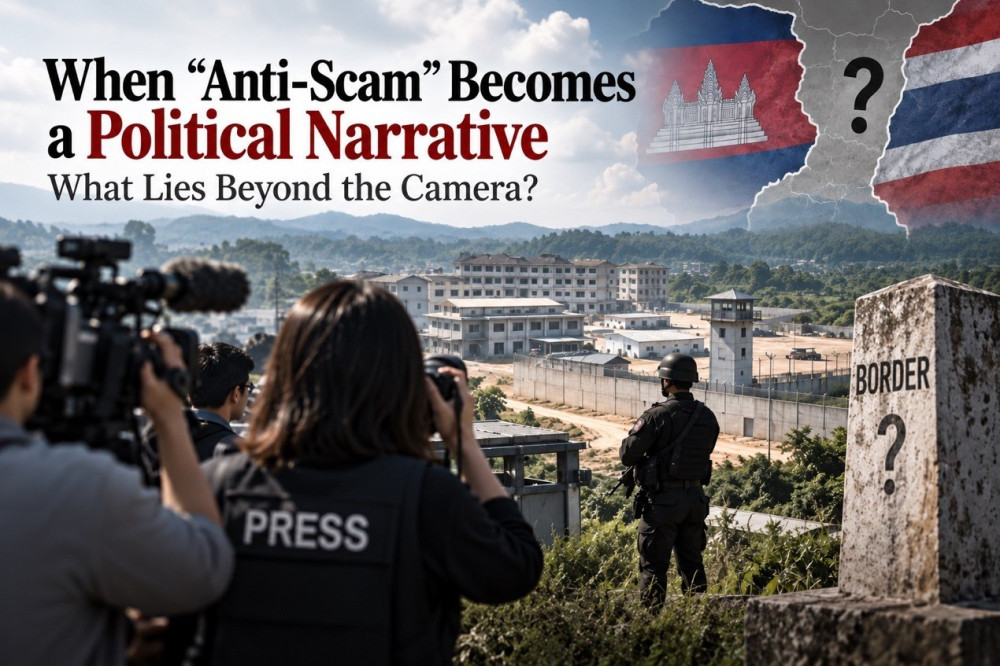
On 7 September, Thai authorities brought members of the ASEAN Observer Team (AOT), along with Thai and international media, to the O’Smach area in Oddar Meanchey province. The delegation visited buildings that Thai authorities said had been used for online scam operations, along with other items and facilities presented as evidence of criminal activity. Through the tour, Thai authorities sought to present the site to the world as a place that had allegedly served as a base for criminal operations targeting victims around the globe.
Cambodia’s Minister of Information, Neth Pheaktra, subsequently called on Thailand to answer a fundamental question: Whose territory is the O’Smach area? Bringing journalists into the area cannot establish sovereignty over it, nor can the use of force to control territory change an international boundary. The fight against online scams cannot be used to retrospectively justify the occupation of territory by force.
What should raise concern is the narrative sequence around which this “tour” was built: the military first took control of the site, then the media were brought in, and finally so-called “evidence of criminal activity” was displayed to the outside world. When a crime scene, military control and media coverage are folded into the same narrative frame, the fight against online scams may no longer be simply about crime prevention and law enforcement; it may begin to function as a tool of political communication.
Once the camera turns towards the alleged evidence of criminal activity, the question of sovereignty over the territory recedes from view, replaced by the image of a “scam site”. The audience’s first reaction is no longer to question the territorial dispute but to condemn the crimes taking place there. That is precisely what makes the narrative so effective: the territorial dispute temporarily disappears from the frame.
The questions that deserve greater scrutiny are therefore these: Who decided which route journalists would take? Who controls the site? Who selected the interviewees? Who explains the area's history and territorial boundaries to the journalists? And how much of what journalists see has already been selected, curated and framed for them?
Journalists may not have played no part in any political decision, yet they may, without realising it, become part of this narrative.
As a result, what appears to be an ordinary “media tour” can have implications far beyond the reporting of crime itself. It does not merely tell the world what happened here; it also reinforces another message: Thailand is here; Thailand is asserting its presence; and the world is watching.
When journalists become witnesses, and when news footage begins to lend legitimacy to political action, are they merely documenting what they are shown, or are they helping Thailand, through their own cameras, to shape the perception that the site is Thai territory?
Fighting Scams Requires Cooperation, Not Force
If we look beyond the “media tour” and examine how the international community actually fights cross-border scams, we see a fundamentally different approach.
On 10 September, representatives of 46 founding member countries, 34 observer countries and four international organisations gathered in Lianyungang, China, for the founding conference of the International Alliance for Combating Telecom and Cyber Fraud. The initiative is built around international cooperation among law enforcement agencies to address transnational telecom and cyber fraud, not around the use of military force as a means of combating transnational crime.
Cambodia is following the same approach. Between July 2025 and 31 August 2026, Cambodian authorities inspected 832 suspected scam locations and launched enforcement operations at 663 of them. According to Cambodian officials, approximately 300,000 foreign nationals have so far been arrested or deported, or have left Cambodia voluntarily, in connection with the crackdown on online scams.
Cambodia is also strengthening international cooperation. On 23–24 September, Phnom Penh will host ICCOS-2026, the International Conference on Combating Online Scams, bringing together governments, law-enforcement agencies, international organisations and other stakeholders to reinforce collective efforts against online scams.
Cambodia has demonstrated both the determination and the capacity to combat online scams on its own territory. If transnational crime can be addressed through international cooperation, why should “anti-scam” serve as grounds for the use of force on Cambodian territory?
When “Anti-Scam” Crosses the Line
This is precisely why the media must remain vigilant. The stronger the moral force of an issue, the more important it is for journalists to maintain critical distance and to examine the power relationships behind the narrative. The situation along the Cambodia-Thailand border involves both the legitimate need to combat cross-border crime and a complex dispute over territory and sovereignty. The two must be kept separate: the existence of “anti-scam” operations cannot determine sovereignty, nor can a media visit substitute for international law.
The real concern arises when “anti-scam” evolves from a law enforcement measure into political language capable of reshaping perceptions of territorial sovereignty. No country can guarantee that it will never become the target of a similar justification. If “anti-scam” can be invoked today to justify the use of force on Cambodian territory, what is to prevent another country from invoking a different justification tomorrow?
Any country could become the next victim.
By Freya Song
Special Correspondent for AKP